.jpg)

Can Holistic management work on Dairy Farms?
Updated: Sep 28
We were early adopters of holistic management on our dairy farms. Back in 2007, I was learning about this new way to manage my business and my life because organic milk prices had stagnated. I was struggling to pay my employees so I could spend more time with my kids. I was a single mom and my kids were now old enough to want to play organized sports and do fun things like ski and white water raft. I had heard that holistic management could help me run a more profitable farm and strive for better life balance. But all the holistic management practitioners seemed to be ranchers and not dairy farmers like me. That's when I met the Van Amburghs.
Paul and Phyllis had been buying some of my cows with New Zealand genetics to help their original herd that was not performing on grass. They were all in on the idea of Holistic Management and we went down that path together. It worked because we knew it would. It made so much sense to us.
Now, almost twenty years later, their farm is pumping with life and energy. Paul and Phyllis are surrounded by their children who are young adults now who love farming. The same is true for the farm I sold to a younger farm family who were keen to continue regenerative farming practices. The photo's speak for themselves.
On my visit to New York State in August for my book launch, Phyllis showed me her growing milking herd. I loved the coat on this Devon cross cow on the left who is getting love from her herdmate. The dappled pattern revealed on her coat is called "bloom" and is a sign of health and energy. I have seen it depicted in 6,000 year old rock art of cattle painted by pastoralists who once roamed the Sahara that was a vibrant savanna at the time. Phyllis says the farm is flush with birds and I saw a murmuration of birds zip over the cows.
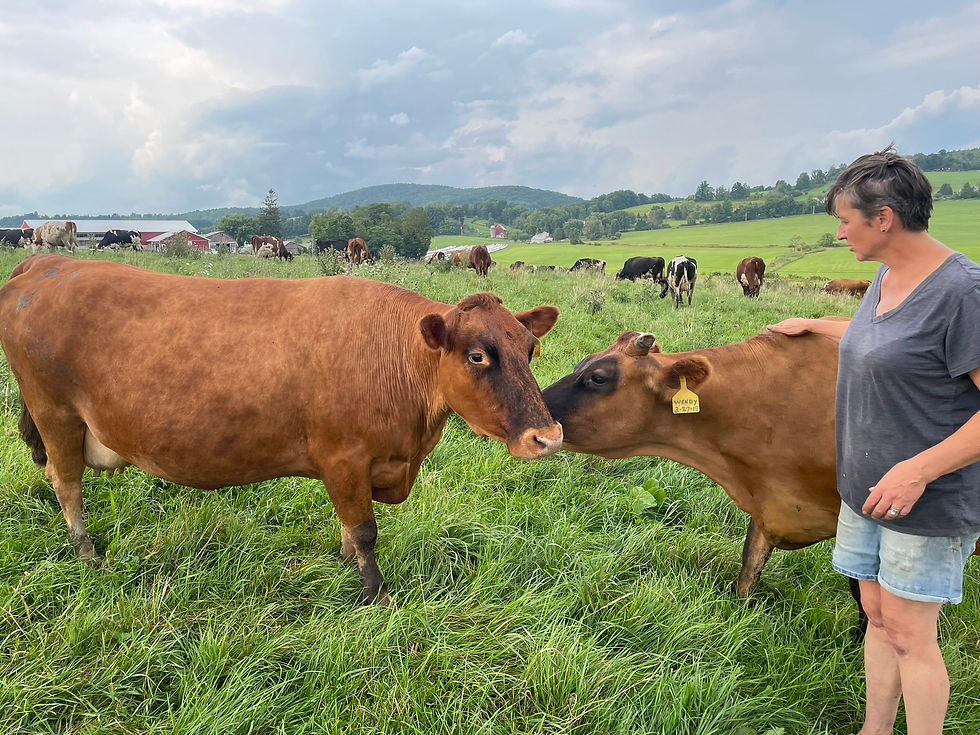
The Van Amburgh's pasture was thick and lush, with a dark green color from the natural fertilization that animal impact of all kinds provides - trampling, dunging, urine, and energy from herd movement. Leaves were green all the way to the base.

The shiny coats on the cattle were a reflection of the the big, fat, shiny grass leaves at their feet. The number of grass tillers per given area was astounding so no bare soil could be seen.
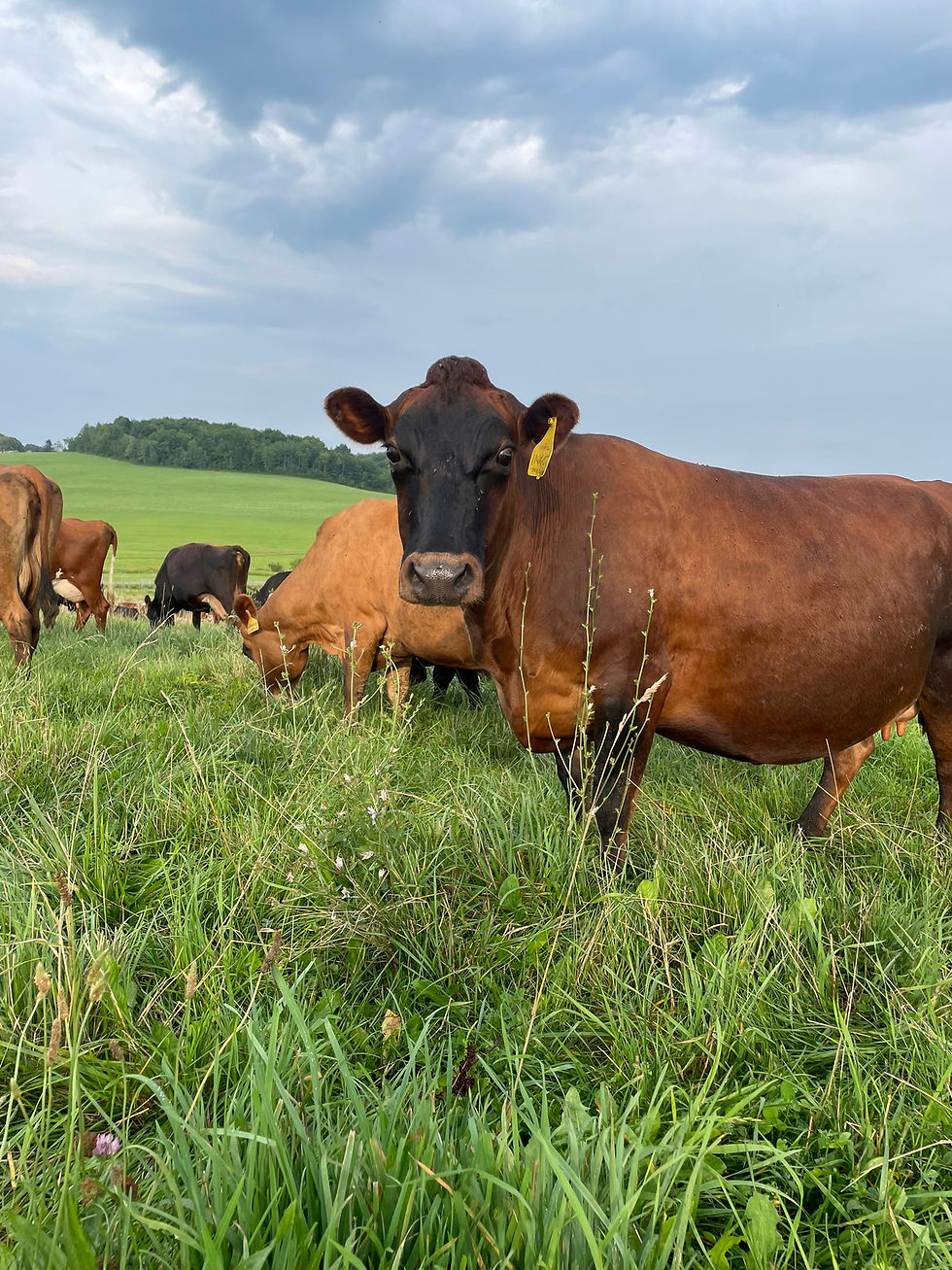
The next day I got a tour of the Meulenberg farm. On the same land that used to dry up in summertime so badly it earned from me the name "Raindance Farm," the new owners are thriving. They are providing even longer pasture recovery periods than I did, punctuated with high animal impact in some cases. This is what the pasture looked like before the cows were let in.

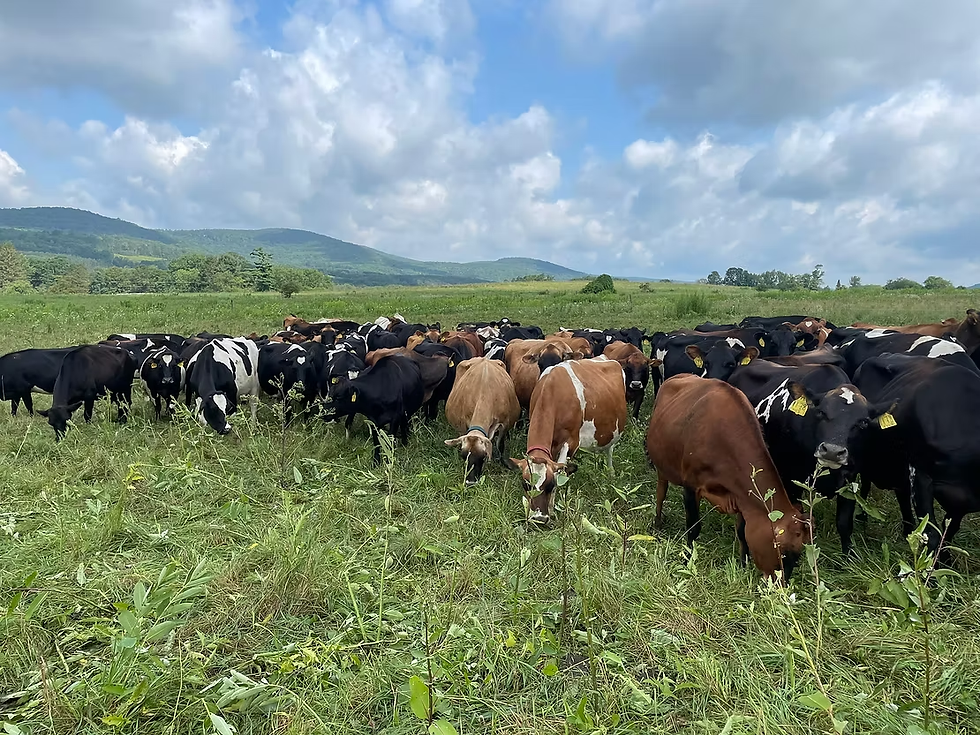
Summer fly pressure had balled up the herd and they shifted around the pasture section for that morning at high density, applying animal impact that will invigorate the grassland. The taller plants are milkweed, the exclusive forage for Monarch butterfly caterpillars.
At the cows feet was a savannah sparrow, eating insects. In this close up you can see the excellent coverage of "soil armor" that is so important for protecting soil - natural capital wealth everyone on the planet depends upon.
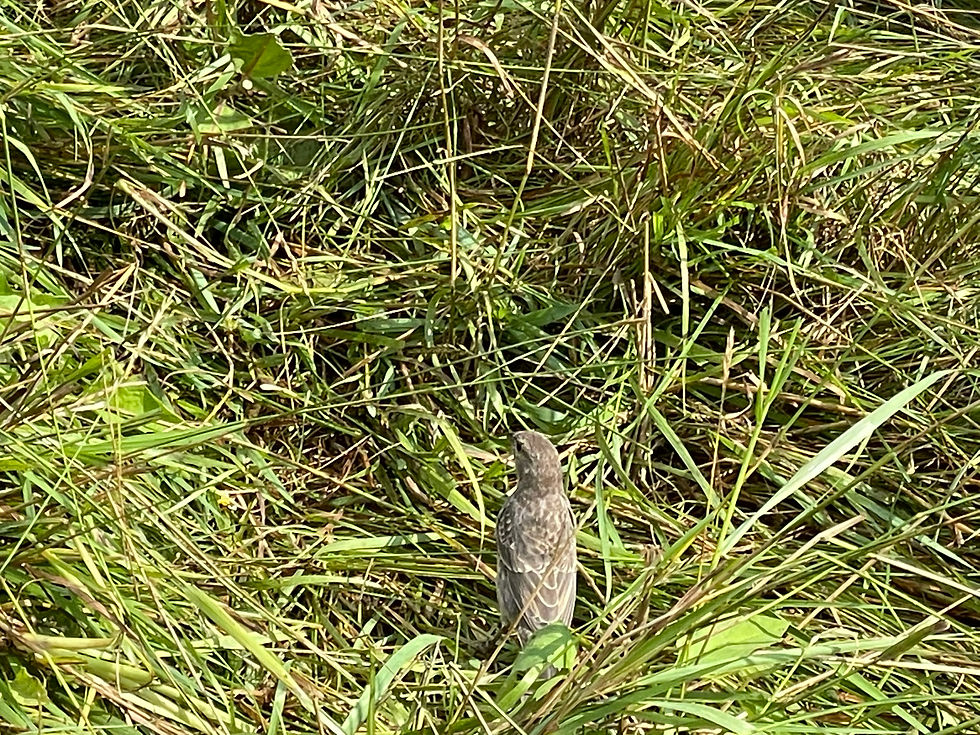
However, the savanna sparrows will not eat the Monarch caterpillars. Milkweed has toxins that the Monarchs can eat but make them poisonous to predators, protecting them. Cows are smart enough to avoid eating the milkweed. It has been well trampled by the herd along with other undesirable plants like horse nettle so grass can outcompete them and keep them from taking over. These trampled plants are food for the soil and are an example of cattle, carefully managed, applying the same animal impact that built soils in the breadbaskets of our planet over thousands of years.
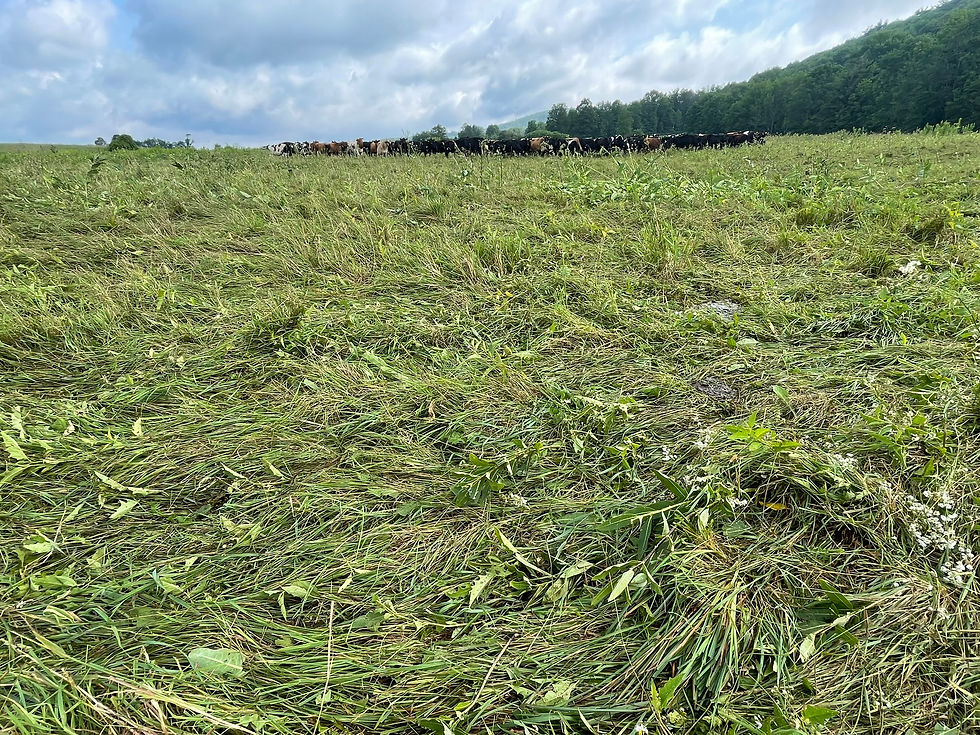
Recovering pasture nearby that had been mowed reminded me of a mesclun salad mix.
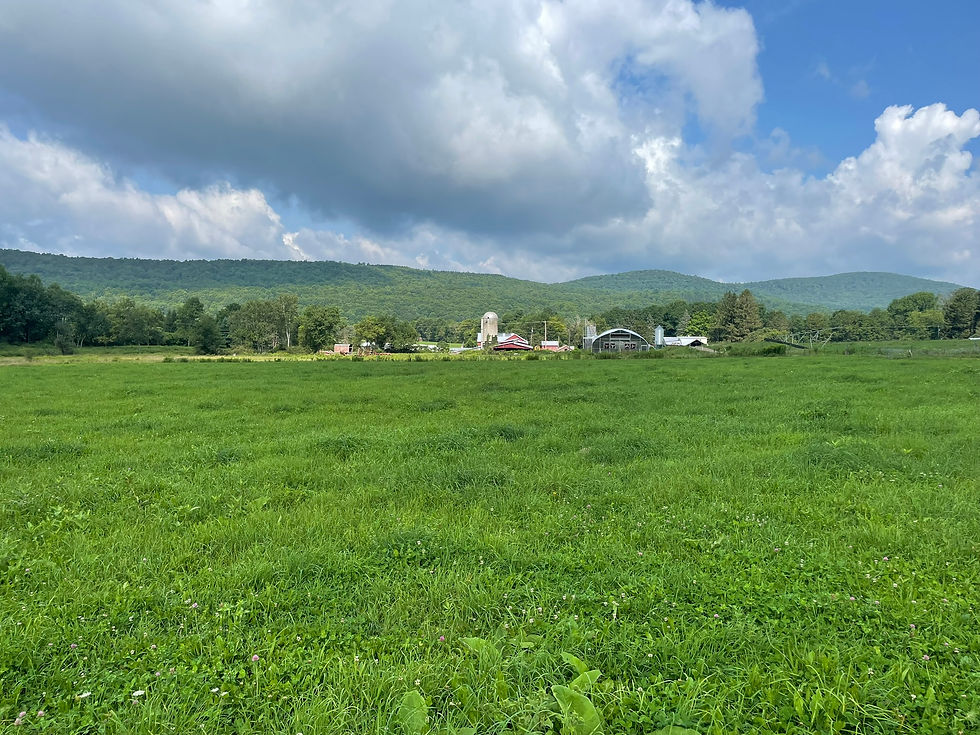
The riparian area that I fenced off over a decade ago to manage carefully, was growing more canary grass (Phalaris canariensis) among the orchard grass (cocksfoot) and timothy than it once did. Perhaps it was the blessings of good rains this season that allowed the canary grass to express itself. One of the beautiful things about diversity is there is always a bank account of species ready to maximize solar energy harvest no matter what the weather or disturbances bring.
This riparian area gets grazed strategically to create a filter strip of grass to keep the stream water clean and grass can grow taller than the cows here. Diversity has improved with John's management and flowers were everywhere. His daughter Lea and I found many butterflies among them. It reminded me of when I used to seek out butterflies with Jasmine and Keira when they were that age. So good for children to be in touch with nature and good for the soul of the elder who can share their joy!


Comments